
ICT
Faculty Leader: Mr S Reagan
KS3
At Key Stage 3, the National Curriculum aims to transform students from passive technology users into skilled computational thinkers and responsible digital citizens, delivering a balance of Computer Science, Information Technology, and Digital Literacy.
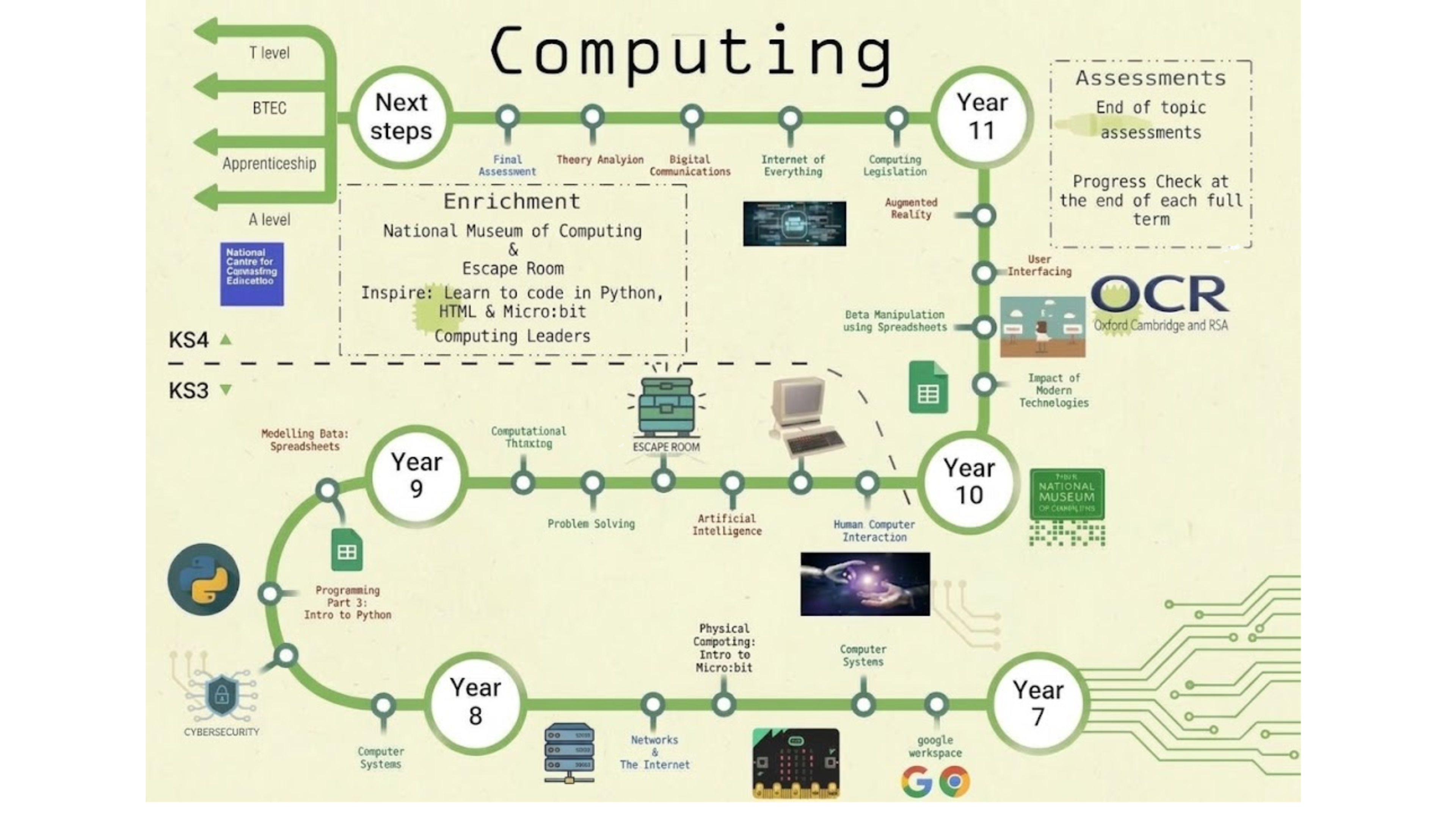
In terms of knowledge and skills, pupils learn how hardware and software components interact, how data is converted into binary digits, and how Boolean logic and sorting/searching algorithms function. Year 7 introduces computing systems, algorithms, searching techniques, physical computing using micro:bits to build foundational logic through hardware inputs and outputs, network fundamentals, and collaborative digital presentation projects using software such as Google Slides.
Year 8 advances to spreadsheet data modelling, cybersecurity, binary representation, web design, and a formal introduction to text-based coding using Python to learn key programming structures like loops and variables, with safe, respectful online behavior embedded continuously throughout both years.
KS4
At Key Stage 4, the OCR Cambridge National in Information Technology transforms students from foundational IT users into analytical data modellers and proficient digital creators, balancing practical software skills with theoretical knowledge of technological systems and data management. In terms of knowledge and skills, pupils learn how design tools, human-computer interfaces, and data collection methods drive effective user experiences, how spreadsheet software processes complex datasets using advanced formulas and functions, and how real-world threats impact data security and organisational compliance.
The qualification is structured into two pieces of coursework and a final written exam, this allows pupils to apply theoretical concepts directly to practical scenarios. Following this sequence, the curriculum introduces the overarching theoretical principles of IT covering data creation, storage, security threats, and digital risk management alongside hands-on learning in spreadsheet data modelling, where students select, manipulate, and present complex data to solve real-world problems.
As pupils progress, they synthesise these skills by planning, designing, testing, and evaluating an interactive digital product, developing professional project management capabilities while reinforcing safe, ethical, and legal digital practices throughout the key stage.
