Media Literacy
Faculty Leader: Mr S Reagan
KS3
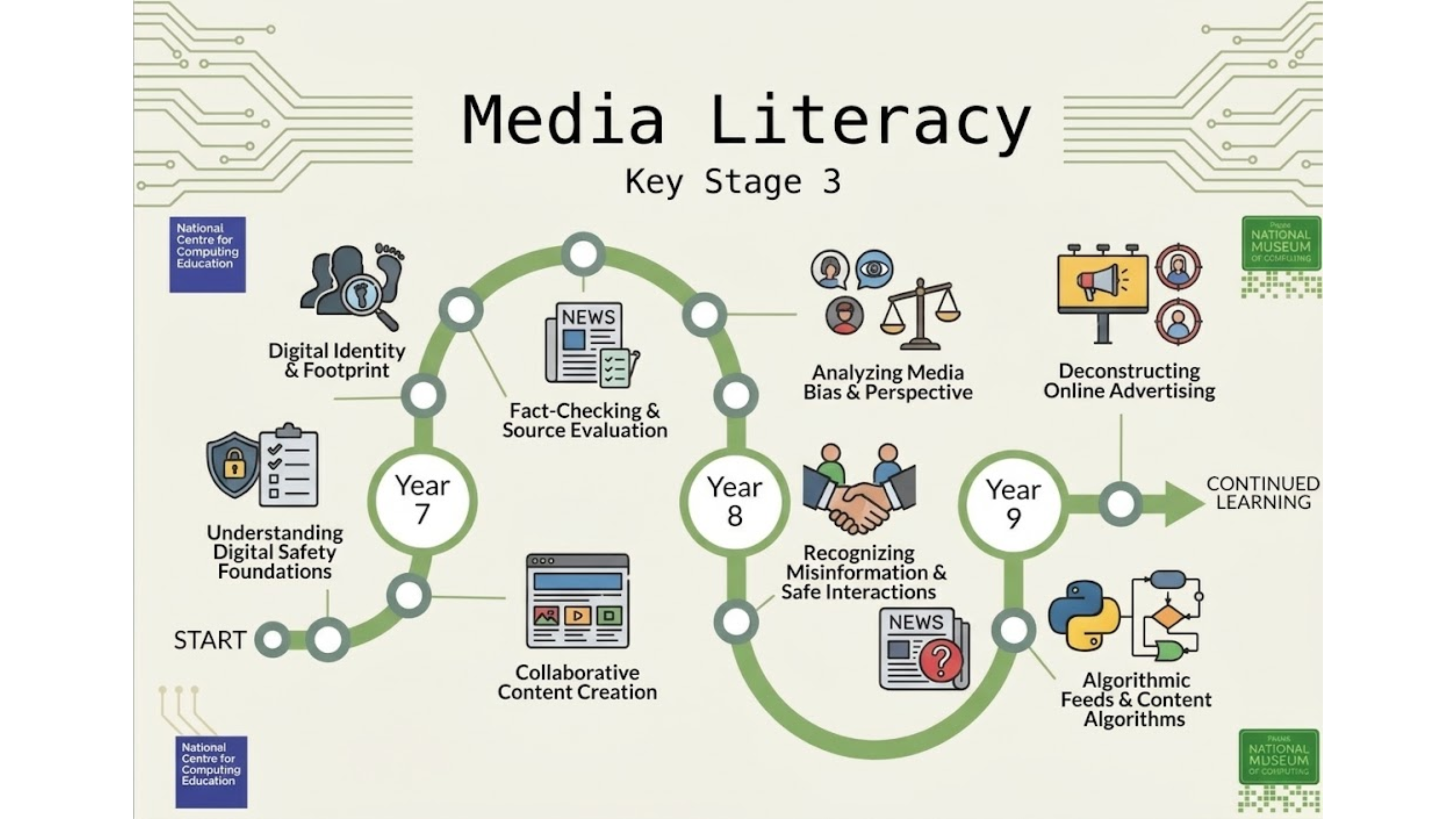
At Key Stage 3, the Media Literacy curriculum transforms students from everyday screen users into smart, critical thinkers who know how online media works, how to stay safe, and how to protect their mental health.
In Year 7, students focus on everyday digital habits and online safety:
- Online Profiles & Communication: Learning how digital identity is built, where to draw boundaries between public and private life, and how social apps change the way we talk to friends.
- Tricks of the Internet: Spotting persuasive design features like infinite scroll and push notifications that keep us hooked, as well as recognizing how viral posts spread.
- Spotting Fake Content & Scams: Learning how to fact-check the newsfeed, spot targeted ads, avoid money scams, and recognize how video games use loot boxes to encourage spending.
- AI & Online Risks: Understanding how Generative AI and deepfakes work, learning the legal rules around sharing images, and recognizing online grooming and recruitment tactics.
In Year 8, students dig deeper into modern media technology, corporate influences, and real-world impacts:
- Algorithms & Tracking: Examining how apps track silent habits (like hover time) to push extreme content, how data brokers sell user details, and who controls global internet infrastructure.
- Misinformation & AI Ethics: Looking at fake news used in politics, state-sponsored bots, and the rights of human creators vs. AI.
- Reporting & Safety Net: Knowing exactly when and how to report danger using official tools like CEOP, Childline, and the Internet Watch Foundation.
- Health, Influencers & Society: Deconstructing how social media ads fuel body insecurities, why self-diagnosing mental health from video apps can be harmful, and unmasking how online culture glorifies gang violence and weapons.