
ICE
Faculty Leader: Mrs H Jackson
KS3
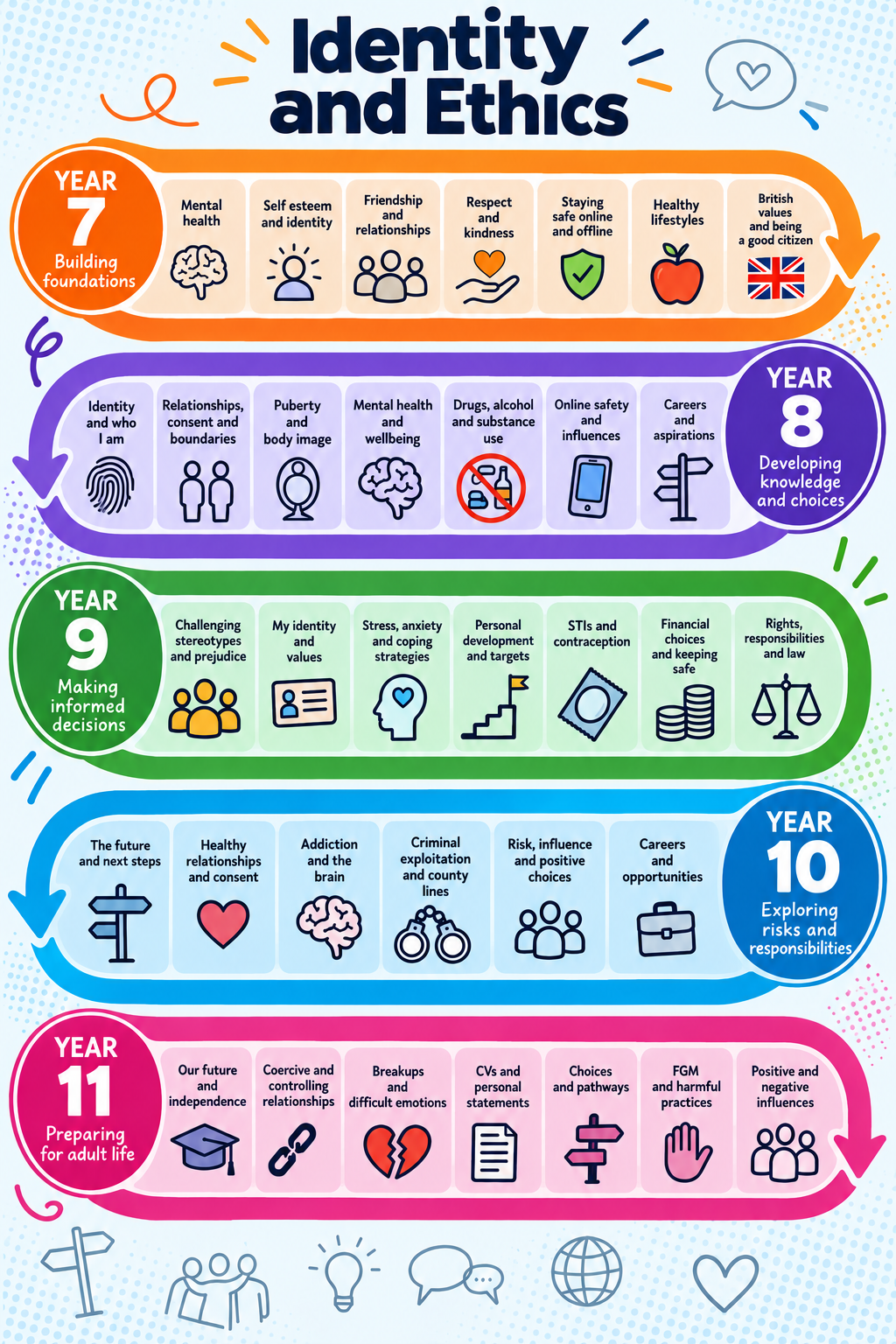
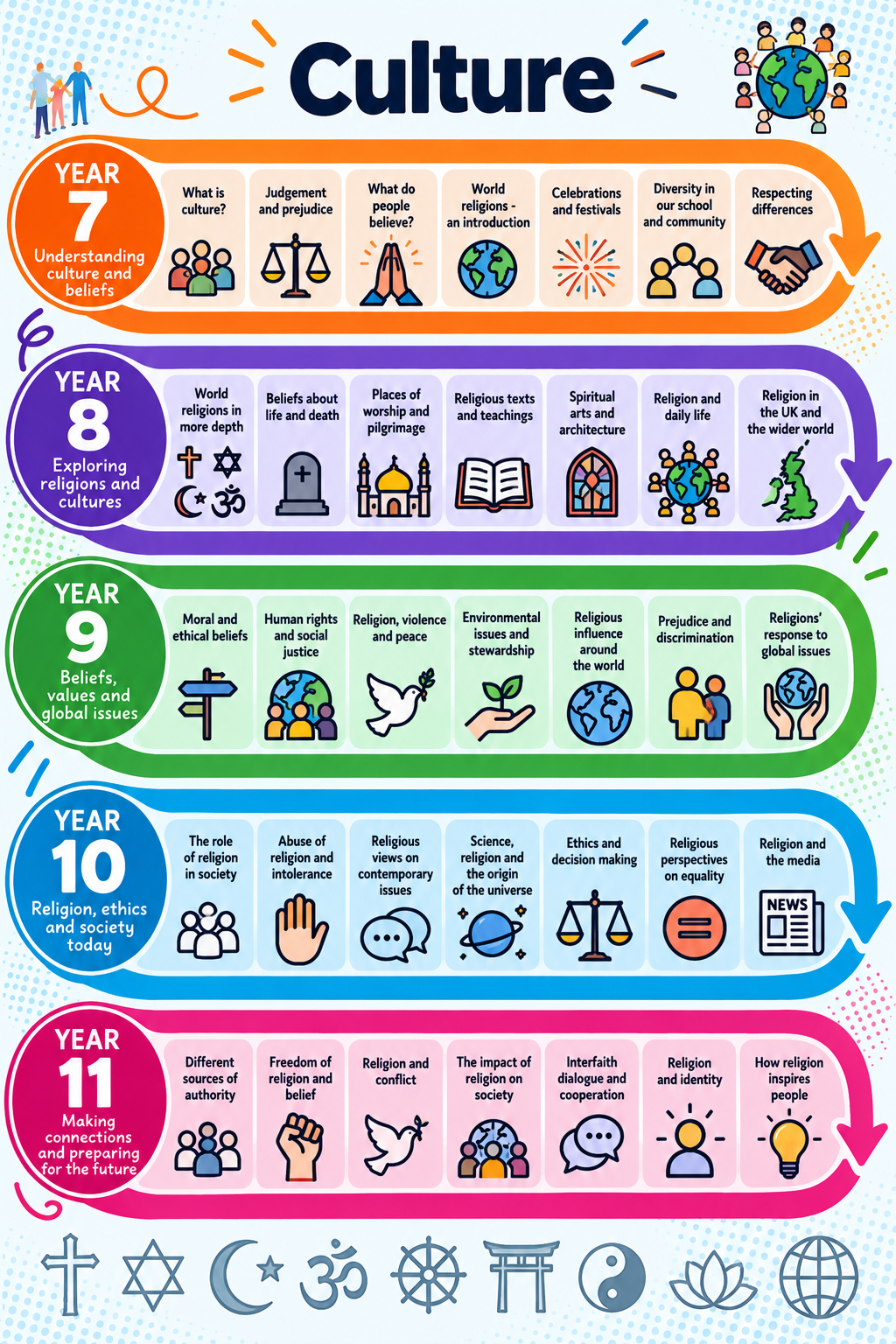
Students will develop a broad range of knowledge, understanding and personal skills through the study of Religious Education (RE), Personal, Social, Health and Economic Education (PSHE), Relationships and Sex Education (RSE), and Citizenship. Building on learning from primary school, they will explore a range of topics including world religions and worldviews, identity and diversity, healthy relationships, physical and mental wellbeing, financial education, rights and responsibilities, democracy, and life in modern Britain. These areas of study develop students' understanding of themselves, others and the wider world, while providing a strong foundation for future study and responsible citizenship.
Learning is carefully sequenced so that new topics build upon and deepen prior knowledge, making meaningful links with other subjects including History, English,maths, Science and Geography. Throughout the curriculum, students will develop key skills such as critical thinking, respectful discussion, ethical reasoning, decision-making and evaluating different viewpoints. Students will be encouraged to reflect on their own beliefs and values, appreciate the perspectives of others, and apply their learning to real-life situations, enabling them to become informed, responsible and active members of society.
Learning Journey Roadmaps:
KS4
The KS4 Personal Development curriculum is organised into four interconnected areas: Personal, Social, Health and Economic (PSHE) Education, Relationships and Sex Education (RSE), Citizenship, and the opportunity to study the Eduqas GCSE Religious Studies Short Course as an additional GCSE qualification.
Personal, Social, Health and Economic (PSHE) Education
Students develop the knowledge, understanding and skills needed to manage the opportunities and challenges of modern life. Topics include physical and mental health, emotional wellbeing, healthy lifestyles, financial decision-making, careers education, online safety, personal identity, and managing risk. Through discussion, reflection and real-life scenarios, students build confidence, resilience and the skills needed to make informed, responsible decisions throughout adolescence and adulthood.
Relationships and Sex Education (RSE)
Relationships and Sex Education equips students with the knowledge and understanding to develop healthy, respectful and safe relationships. Students explore topics including different types of relationships, consent, communication, sexual health, contraception, online relationships, recognising unhealthy behaviours, and the importance of respect, equality and diversity. The curriculum promotes empathy, responsibility and safeguarding, enabling students to make informed choices and understand their rights and responsibilities within relationships.
Citizenship
Citizenship encourages students to become informed, active and responsible members of society. Students investigate how democracy operates within the United Kingdom, the role of government and the legal system, human rights, justice, the economy, and the responsibilities of citizens within local, national and global communities. They explore contemporary social and political issues, develop critical thinking skills, evaluate different viewpoints and learn how individuals can contribute positively to society through active participation and informed decision-making.
Eduqas GCSE Religious Studies Short Course (Optional Additional GCSE)
Students who choose to study the Eduqas GCSE Religious Studies Short Course have the opportunity to gain an additional GCSE qualification alongside their core curriculum. The course focuses on the beliefs, teachings and practices of Christianity and Hinduism, while exploring important philosophical and ethical issues relevant to today's world.
Students examine topics such as the nature of God, life after death, good and evil, human rights, relationships and families, crime and punishment, peace and conflict, and issues surrounding equality and justice. Throughout the course, students develop the ability to analyse religious beliefs, evaluate different perspectives and construct well-reasoned arguments supported by evidence.
The course promotes respect for diverse beliefs and cultures while encouraging students to think critically about moral, ethical and philosophical questions. It provides an excellent foundation for further study and develops valuable analytical, evaluative and communication skills that support success across the wider curriculum.
Through these areas of study, students develop a secure understanding of personal wellbeing, relationships, citizenship and ethical decision-making. They engage with contemporary issues affecting individuals and society, building the knowledge, confidence and critical thinking skills needed to become informed, responsible and respectful members of their communities. For those who choose the optional Eduqas GCSE Religious Studies Short Course, students also gain a nationally recognised GCSE qualification while deepening their understanding of Christianity, Hinduism and the role of religion in the modern world.
